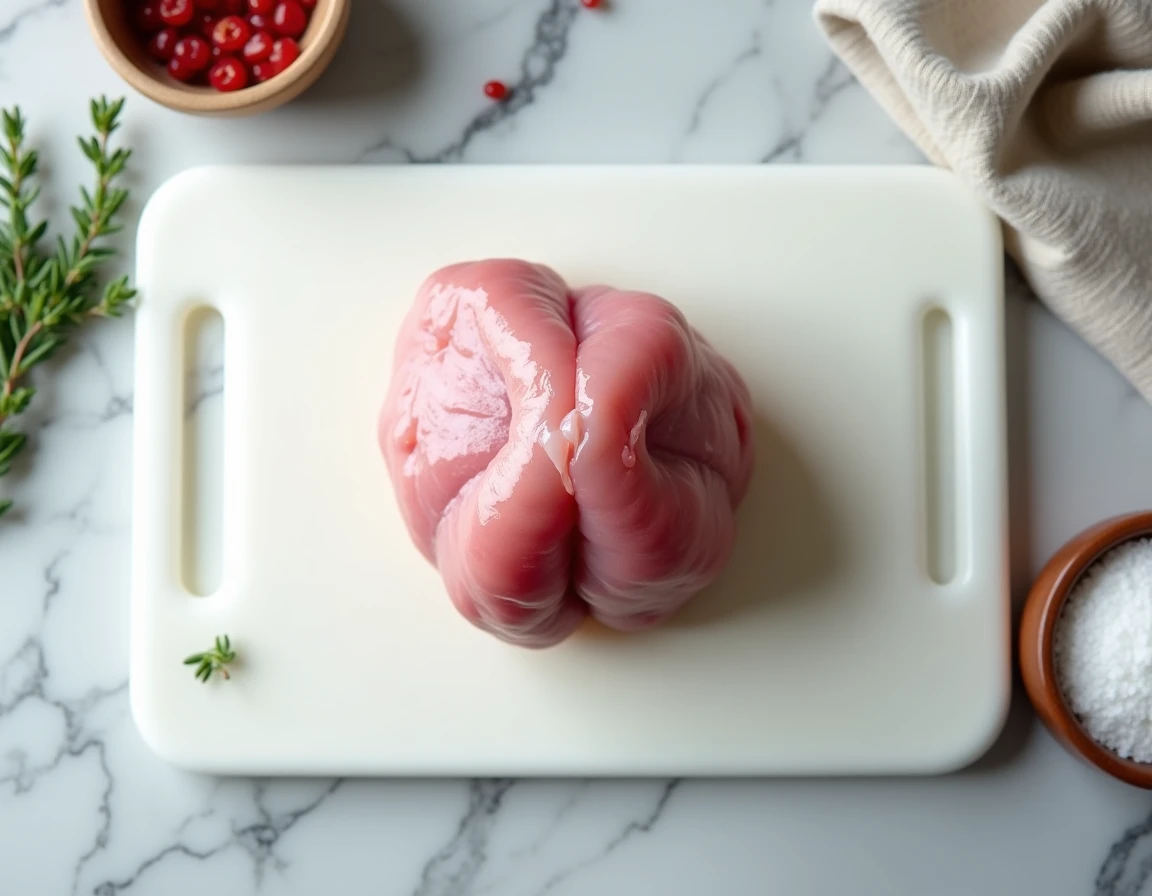
When you get sheep testicles from the butcher or directly after slaughter, the question quickly arises: do you cook them right away, or do you store them for later? Freezing works, but this offal is not treated like a regular piece of meat. Its high water and soluble protein content makes it particularly sensitive to bacterial proliferation and texture degradation.
Cold chain before freezing: the point that no one details
Most guides talk about packaging and freezer temperature. The real lever is upstream. The faster the sheep testicle is refrigerated after cutting, the more effective the freezing will be. We are talking about getting below 4 °C in the refrigerator within hours of purchase, even before thinking about the freezer.
In practice, if you buy from a tripe seller or at a market, the return trip matters. An insulated bag with an ice pack is not a detail for this type of product. Offal loses quality much faster than a regular steak.
Once at home, place the pieces in the refrigerator immediately. Those that you do not cook within 24 hours should go to the freezer without delay. This respect for the cold chain conditions everything else, including the duration for which you can keep the frozen product. You can also learn more on Matin Gourmand to delve into best practices related to this offal.
Freezing sheep testicles: suitable packaging and cutting
The speed of freezing plays a direct role in the texture after thawing. Slowly frozen offal sees its ice crystals grow larger, which breaks the fibers and results in a mushy outcome when cooked. To circumvent this problem, we work in pieces rather than whole.
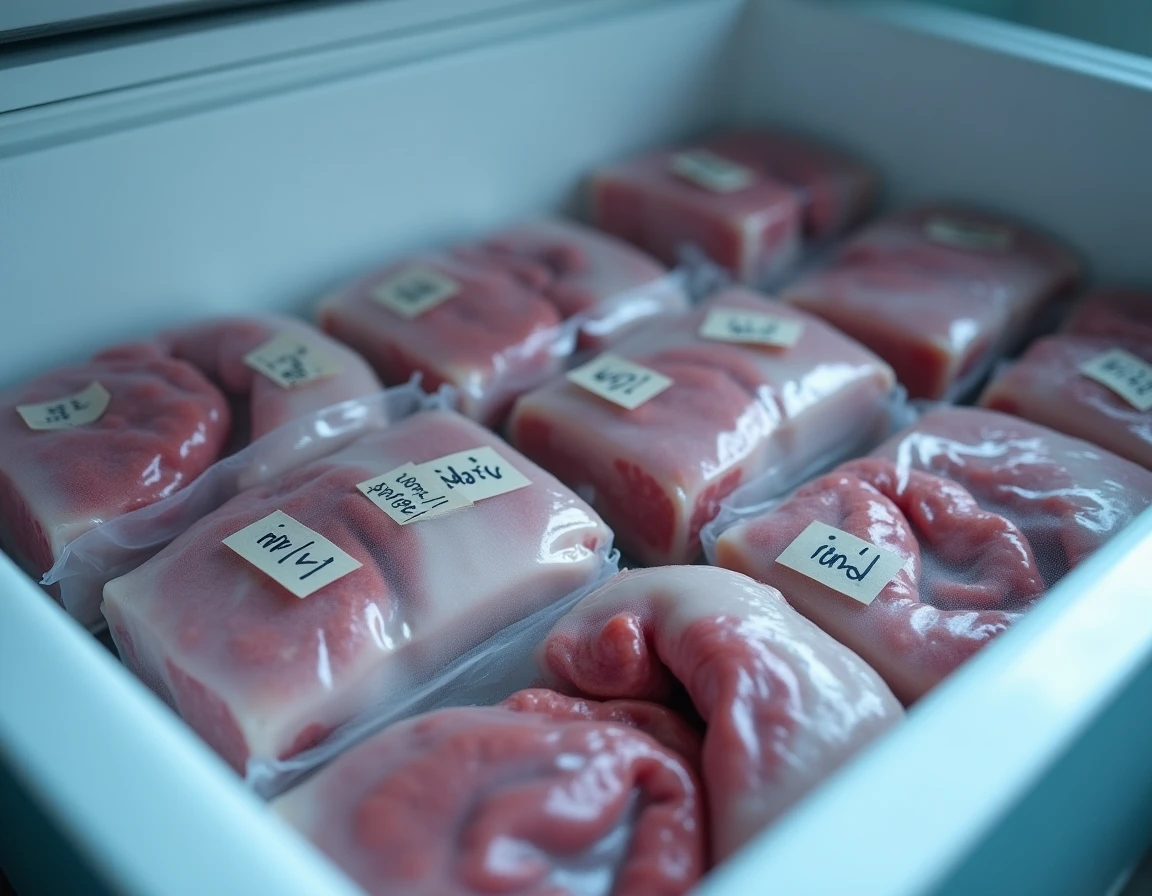
Cutting the sheep testicle into slices or individual portions before freezing reduces the time needed to reach -18 °C at the core. The cold penetrates faster, the crystals remain small, and the texture holds up better when cooking.
On the packaging side, we aim for complete airtightness. The goal is twofold: to prevent oxidation and to avoid freezer burn (those whitish and dried-out areas that ruin the flavor).
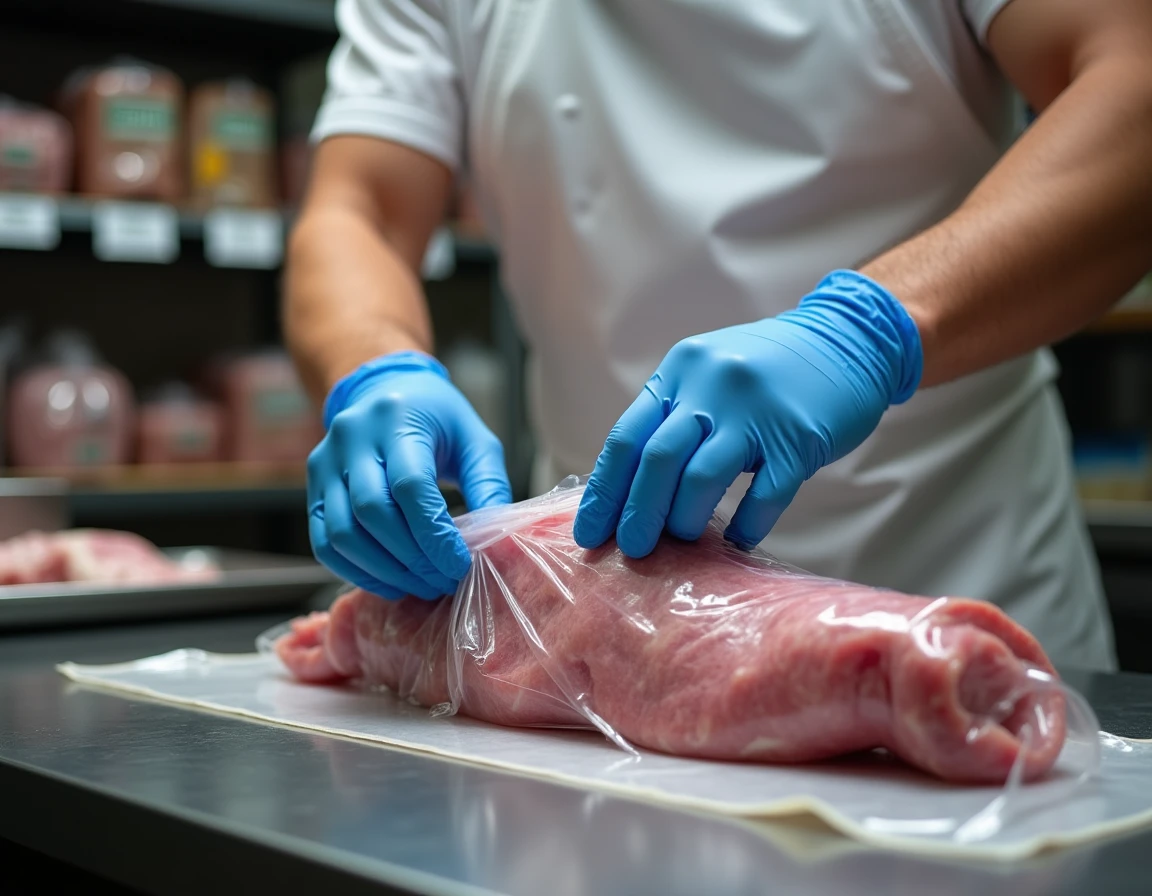
- Wrap each portion individually in cling film, then slide it into a freezer bag, pushing out as much air as possible
- Use a vacuum sealer if available, as it is the most reliable method for offal
- Label each bag with the freezing date, because we always forget when we put that package at the back of the drawer
- Never stack fresh portions on top of already frozen foods; lay them flat to speed up freezing
A vacuum-sealed package doubles the protection against oxidation compared to a simple zip bag. On such a fragile product, the difference is clearly felt in taste.
Freezer storage duration: quality versus food safety
It is often said that offal can be stored for three months in the freezer. This figure corresponds to the optimal organoleptic quality limit: beyond this, the texture degrades, the taste fades, and the result in cooking becomes disappointing.
From a health perspective, the logic is different. Freezing at -18 °C stops bacterial multiplication. A properly packaged product maintained at this temperature does not become dangerous after three months. Opinions vary on this point, but several food safety references indicate that red meats and offal remain safe well beyond this threshold, as long as the cold chain has never been broken.
The nuance can be summarized as follows: an offal frozen for six months remains consumable, but it will have lost flavor and texture. For sheep testicles, whose culinary interest lies in a melting texture and subtle taste, three months represents a reasonable window.
Signs that frozen sheep testicles have waited too long
Before cooking a piece taken from the freezer, check a few simple points.
- Whitish or frosted areas on the surface indicate freezer burn: the product is consumable but its texture will be altered
- An abnormal smell after complete thawing signals degradation that should not be ignored
- A grayish appearance or a slimy film after refrigeration should lead to discarding the product without hesitation
Thawing sheep testicles: mistakes to avoid in the kitchen
Thawing at room temperature is the worst option for offal. The surface quickly reaches a temperature conducive to bacteria while the core remains frozen. Thawing in the refrigerator remains the only recommended method: it takes about twelve hours for individual portions.
For those short on time, a cold water bath works. Place the airtight bag in a container of cold water, changing it every thirty minutes. The microwave is possible on the defrost setting, but it starts to cook the edges on such a thin product, which alters the texture irreversibly.
A point often overlooked: never refreeze raw thawed sheep testicles. Bacterial multiplication resumes as soon as the temperature rises. However, if you cook it after thawing, the cooked dish can go back in the freezer for another storage period.
Sheep testicles freeze well as long as two simple rules are followed: an unbroken cold chain from the butcher to the freezer, and packaging that allows no air or moisture to pass through. Three months frozen for an optimal taste experience, and slow thawing in the refrigerator to avoid ruining anything when it comes time to cook.