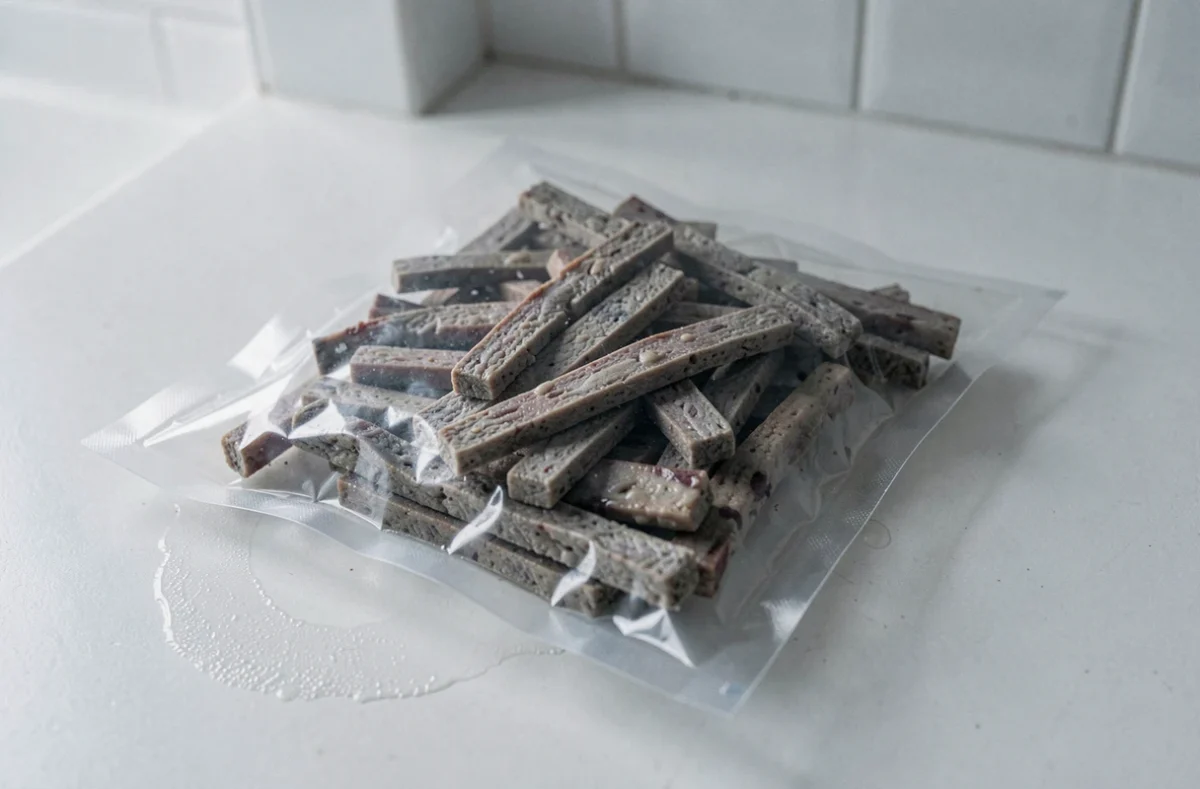
You take a pack of bacon lardons out of the fridge and their color catches your eye. Pale pink when purchased, they now lean towards gray, even brown in places. Should you throw them away or can you still cook them? The answer lies in a set of specific indicators, not just the color alone.
Why bacon lardons change color in the refrigerator
The pink hue of bacon lardons is linked to the nitrite salts added during production. The resulting pigment is unstable: when exposed to oxygen or light, it gradually oxidizes.
The result: the surface of the lardons turns gray, then brown. This phenomenon can occur even before the expiration date, especially if the packaging has been opened or if the tray has been exposed to light in the fridge.
In other words, a gray lardon is not necessarily a dangerous lardon. The color indicates oxidation of the pigment, not necessarily bacterial proliferation. Knowing how to recognize gray or brown lardons requires considering multiple criteria before drawing a conclusion.
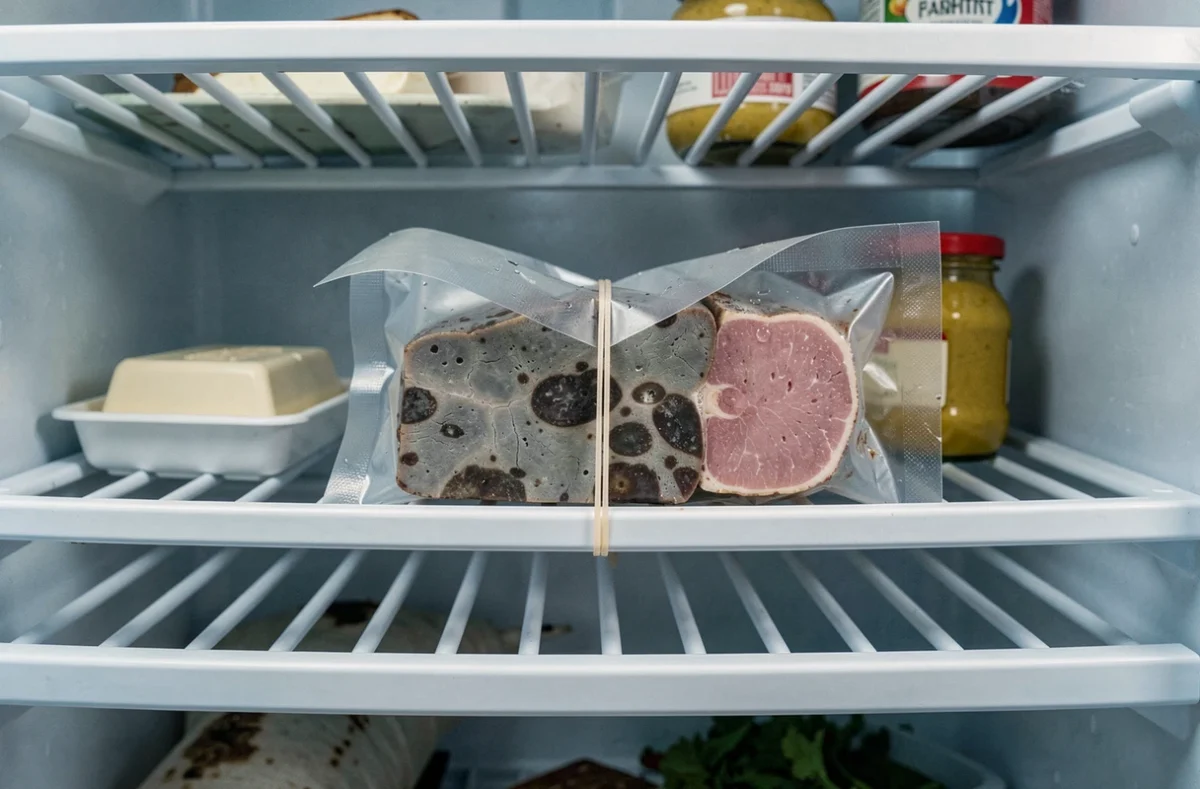
On the other hand, green or iridescent spots on the surface are a much more concerning signal. They often indicate advanced bacterial activity. In this case, the trash is the only reasonable option.
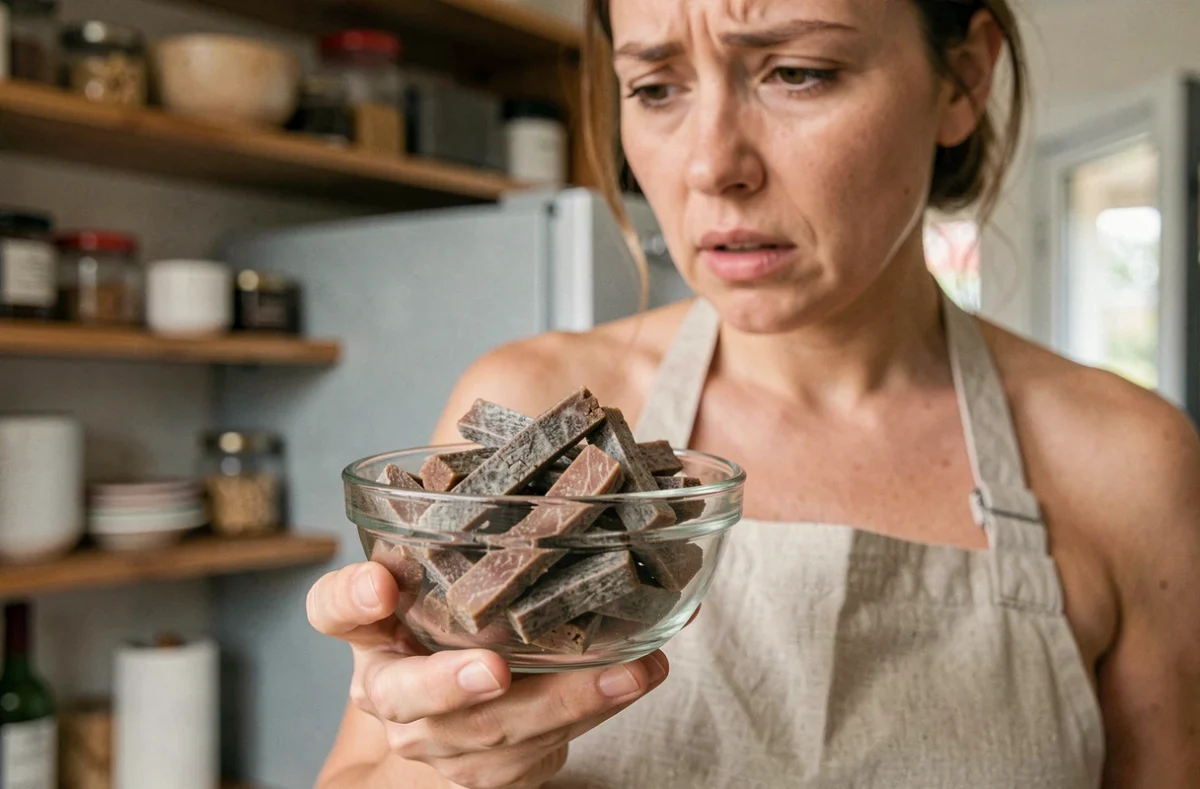
Expired lardons: three reliable criteria to check
Color gives a first alert, but it is never enough to make a decision. Three additional checks allow for a conclusion.
Smell, the most telling test
Open the tray and smell. Fresh lardons emit a slightly salty, subtle odor. A sour, acidic, or distinctly unpleasant smell indicates bacterial degradation. This test works even when the appearance still seems acceptable.
Be careful: some pathogenic bacteria produce neither odor nor visible change. The absence of a bad smell does not guarantee safety if the expiration date is significantly exceeded.
Texture to the touch
Take a lardon between your fingers. The flesh should remain firm and slightly moist. A slimy or sticky film on the surface is a sign of advanced deterioration. This film corresponds to a bacterial biofilm, a layer produced by multiplying microorganisms.
Even if the smell seems neutral, this slimy texture justifies throwing the entire package away.
The expiration date
The expiration date printed on the lardons is a “use by” date, recognizable by the mention “to be consumed by”. It sets a strict health limit, established after microbiological tests conducted by the manufacturer. It has nothing to do with the minimum durability date (MDD) found on pasta or canned goods.
Beyond the expiration date, the product may pose a risk even if it seems normal. Manufacturers incorporate a safety margin in their calculations, but this margin remains narrow for a refrigerated meat product.
The storage history weighs as much as the date
You may have noticed that two packages bought on the same day can evolve differently? The reason lies in their respective thermal journeys.
A pack of lardons left on the countertop during meal preparation and then returned to the fridge has experienced a break in the cold chain. Even brief, this interruption significantly accelerates bacterial multiplication.
Here are the situations that shorten the actual shelf life of lardons, regardless of the printed date:
- The refrigerator is set above the recommended temperature for the cold zone (the lower part of the fridge, usually the coldest)
- The package was opened and then resealed without airtight protection, exposing the lardons to the ambient air of the fridge
- The lardons were left out of the refrigerator during transport or in the kitchen, even for a few minutes in hot weather
- The packaging shows unusual swelling, a sign of gas production by bacteria inside the tray
In each of these cases, the displayed expiration date is no longer a reliable indicator. The product may deteriorate well before the expected date.
Cooking suspicious lardons: what heat eliminates and what it leaves
A common belief is that cooking at high temperature “rescues” questionable lardons. The reality is more nuanced.
Heat does indeed destroy most living bacteria. Sautéing lardons in a pan eliminates any salmonella or listeria present on the surface, provided it reaches a sufficient internal temperature.
The problem lies with toxins. Some bacteria, as they multiply, produce toxic substances that resist heat. Cooking kills bacteria but does not always destroy their toxins. Once these toxins are present in the food, no home cooking temperature neutralizes them.
Cooking does not replace rigorous checking before preparation. If the smell, texture, or date raise doubts, cooking the lardons does not solve the problem.
Summary of actions to take with questionable lardons
Here’s a simple sequence to follow whenever you hesitate:
- Check the expiration date: if it has passed, do not take risks, especially for vulnerable individuals (young children, pregnant women, the elderly, or immunocompromised people)
- Observe the color: uniform gray may result from simple oxidation, but green or iridescent spots indicate contamination
- Smell the lardons: any acidic, sour, or unusual odor requires discarding the package
- Touch the surface: a slimy or sticky film confirms bacterial proliferation, even without a marked odor
- Check the packaging: swelling of the vacuum-sealed or modified atmosphere tray indicates microbial gas activity
One of these signals is enough to justify throwing the lardons away. The combination of several signals leaves no doubt. The cost of a pack of lardons remains far less than the consequences of food poisoning.