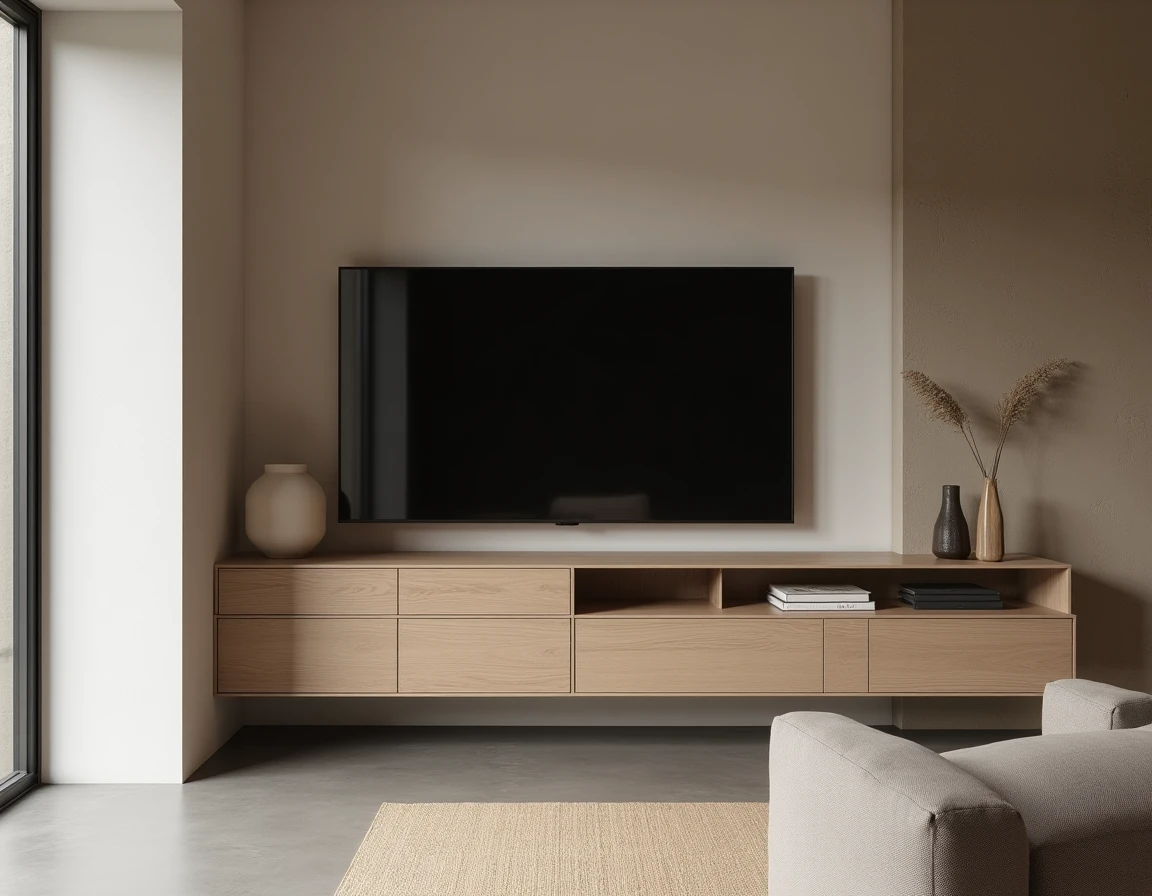
An angled TV unit occupies a corner often underutilized in the living room. Its V or L shape frees up the side walls while centering the screen in the line of sight from the sofa. In 2026, this format evolves towards functions that go beyond simple audiovisual storage: integrated work surface, niche tailored for a soundbar, separable modules suitable for mobile tenants.
Hybrid angled TV unit: the integrated workspace in the living room
The generalization of remote work in living spaces has prompted several European manufacturers, including Gautier and Mobalpa in their recent catalogs, to design angled TV units with a return work surface. The principle: extend the main surface with a side wing capable of accommodating a desktop screen or a laptop.
This return transforms a blind spot into a functional workspace without adding extra furniture. In the evening, the TV screen takes precedence; during the day, the same structure serves as a desk. The space-saving is tangible in living rooms of less than twenty square meters, where every linear centimeter counts.
To keep the whole unit cohesive, the desk return adopts the same finish as the body of the furniture. The most advanced models offer a common cable management system for both areas, avoiding a double power circuit. Finding dkomdecofr inspirations for the living room allows you to visualize how these hybrid configurations fit into different spaces.
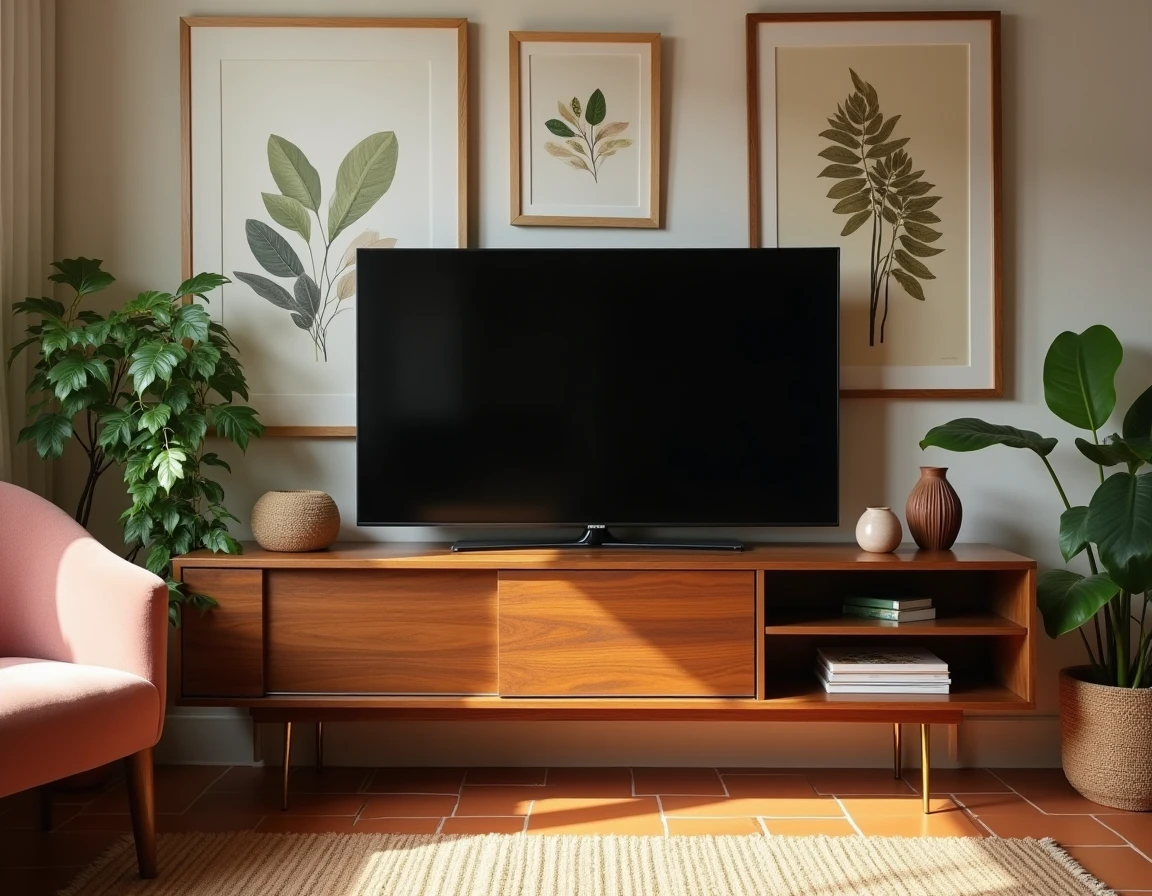
Acoustic niche and angled TV unit adapted for Dolby Atmos sound
Next-generation soundbars (Sonos, Bose) project channels towards the ceiling to simulate immersive sound. A classic TV unit, flat against the wall, leaves little room for side satellites or for wave reflection. An angled unit exploits the natural reflection of the two adjacent walls, enhancing spatialization without multiplying speakers.
Some 2025-2026 models incorporate slightly inclined side surfaces or niches whose dimensions match the standard sizes of Dolby Atmos soundbars. The top surface remains free for the screen, while the middle level accommodates the soundbar at ear height for a seated viewer.
Points to check before purchase
- The depth of the central niche must exceed that of the soundbar by at least two centimeters, so that the speaker grille is not obstructed by the furniture front
- The internal walls benefit from being covered with a non-reflective material (acoustic felt, cork) to limit unwanted vibrations in the enclosure
- The rear cable management must allow for HDMI eARC connection between the TV and the soundbar without forcing the cable’s curvature, which deteriorates the signal beyond a certain bending angle
Separable modules for tenants: reconfigurable angled TV unit
The increase in residential mobility and short-term rentals changes expectations regarding furniture. A monobloc angled TV unit two meters long poses a logistical problem with each move and does not adapt to a corner of different dimensions in the next home.
Angled TV units made of separable modules address this constraint. Brands like IKEA, Vox, or Tiptoe offer independent, stackable or juxtaposed boxes that form an angle in one living room and a straight line in another. Each element generally measures less than sixty centimeters wide, simplifying transport in a standard utility vehicle.
The fastening system between modules varies: wooden dowels, magnetic connectors, or invisible metal brackets. Magnetic connectors offer the quickest setup but support less weight than a bolted bracket. For a unit intended to hold a large screen, assembly with metal brackets remains the most reliable.
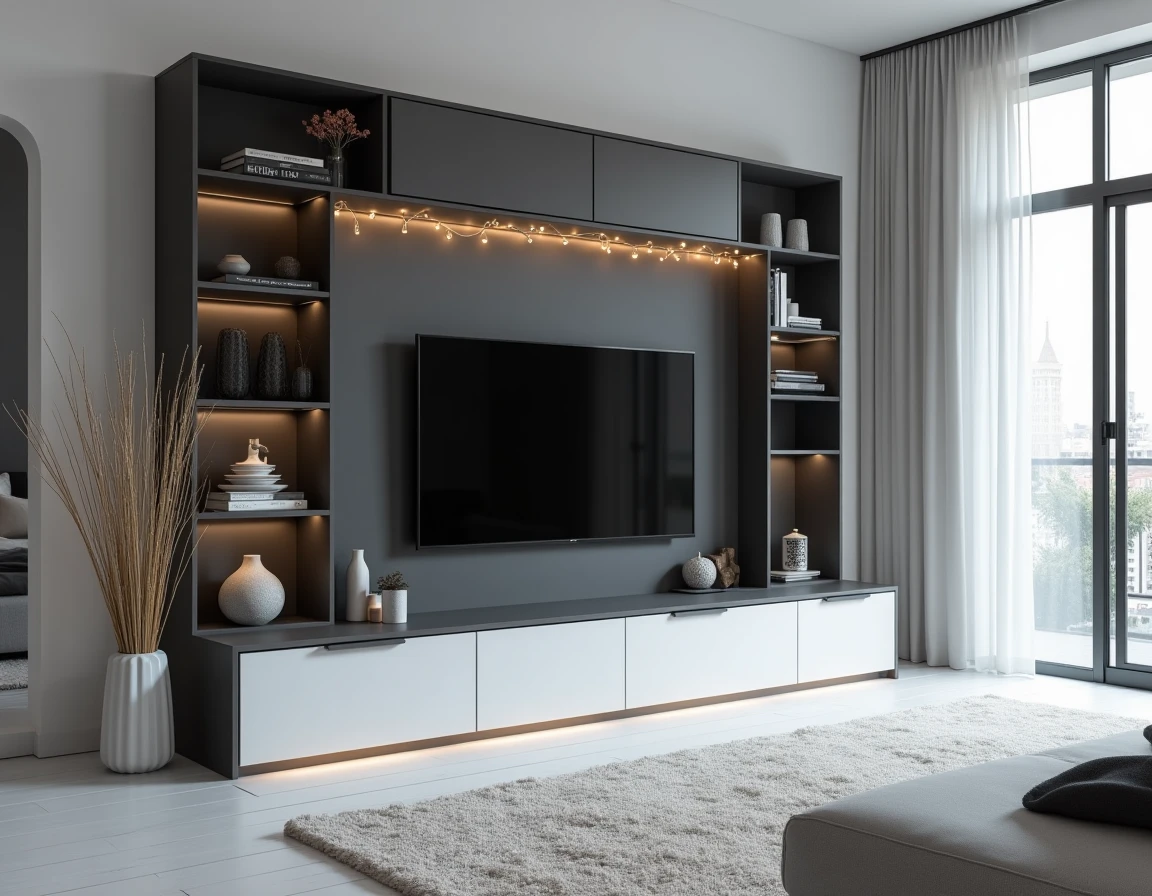
Materials and finishes: wood, metal, and floating lines in 2026
The material trend for angled TV units in 2026 continues the movement initiated in previous years: light woods (bleached oak, ash), bi-material combinations of wood and black metal, and wall-mounted effects that visually lighten the unit.
Most sought-after finishes this year
- Brushed natural oak veneer, which retains the texture of the grain under hand and ages without darkening, provided a protective oil is applied once a year
- MDF fronts with matte lacquer, tinted in neutral tones (beige, dove gray), whose lack of reflection reduces light distractions during viewing
- Wire steel legs elevating the unit by ten to fifteen centimeters, creating a void under the enclosure that facilitates the passage of a robot vacuum and gives an impression of lightness
The floating effect, achieved through hidden wall mounting, remains the most spectacular finish. The unit appears suspended in the corner without a visible leg. This installation requires a load-bearing wall or reinforcement with chemical anchors in the case of drywall partitions, which excludes tenants subject to strict restoration clauses.
Choosing an angled TV unit in 2026 is determined less by aesthetics alone than by compatibility with real use: remote work, immersive sound, frequent moves. First, identify the primary constraint, then filter models based on this criterion to avoid returns and costly compromises.