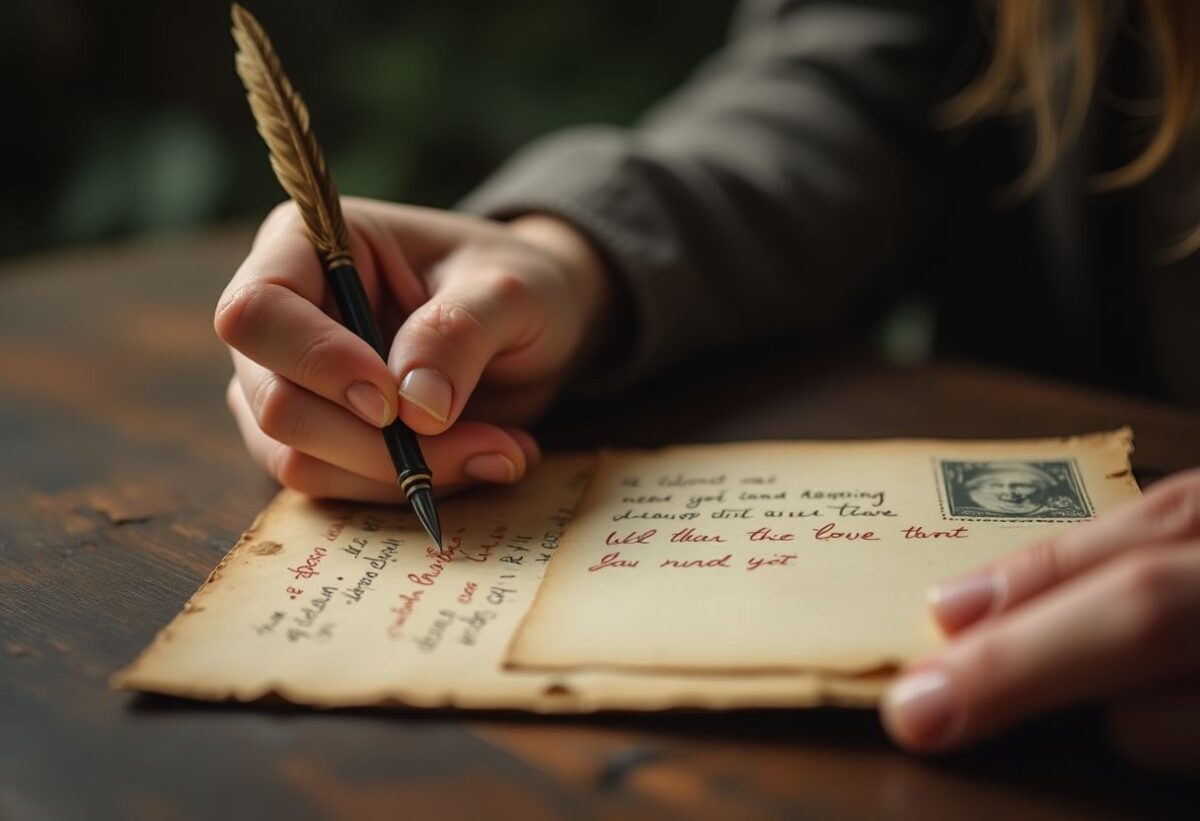
The technological evolution has transformed the way we communicate, making messages instantaneous and emails predominant in our daily exchanges. Yet, the warmth and personalization of a card to send have never lost their charm. In the digital age, where everything happens online, taking the time to write a card and mail it has become a rare, almost sacred gesture. This simple act creates a tangible bond, an authentic connection that goes far beyond the screen. The carefully chosen words, the handwritten script, and even the choice of paper become expressions of genuine feelings.
The historical origins of the card to send
To understand why these cards have retained such appeal, a return to their origins is necessary.
The earliest evidence of sent cards dates back to ancient Egypt, where messages written on papyrus were used to communicate between pharaohs and their subjects. Over the centuries, the Romans adopted this practice, sending missives on wax tablets.
It was not until the 19th century that the postcard as we know it came into existence, thanks to the rise of printing which allowed for mass production. It was then that the greeting card flourished, becoming a popular means of sending wishes for holidays and special occasions.
Today, it remains a strong symbol of communication, conveying personal messages in an often impersonal world.
The emotional impact of a handwritten card
The words inscribed by hand carry a personal imprint that the digital cannot reproduce.
- Handwriting: Handwritten text engages the heart as much as the mind, each loop of a letter reflecting personal intention.
- Choice of words: Carefully crafted messages demonstrate attention and consideration that deeply touch the recipient.
- Feeling of connection: Receiving a physical card creates a tangible link, proof of the time and effort invested in expressing a sentiment.
- Durability of memories: A kept card becomes a keepsake, a lasting testament to shared affection, long after the envelope has been opened.
How to choose the perfect card
Choosing a card to send requires special attention, as every detail matters to reflect the intended message.
First, consider the occasion. A card to send for a birthday will not be the same as a condolence card.
Next, the visual design plays a fundamental role: colors, patterns, and illustrations should match the recipient’s taste. The words inside, whether printed or handwritten, should resonate with the message you wish to convey.
Finally, the quality of the paper adds an additional dimension, with touch being as important as sight. Every element, from the choice of words to the texture of the paper, contributes to making your card a gift in itself.
The environmental and ethical benefits
Sending a physical card may seem outdated, but it also presents benefits for our planet and society.
- Sustainability: Choosing cards made from recycled paper or FSC certified helps reduce environmental impact.
- Support for the local economy: Opting for local creators and printers encourages the regional economy and supports emerging artistic talents.
- Ethical awareness: Working with companies committed to fair trade ensures respectful and fair practices from start to finish in the production chain.