The European regulation prohibits certain flavors in commercial e-liquids but leaves the door open for personal creations made at home. Mixing bases and flavors does not guarantee a stable or pleasant result without adhering to precise dosages and appropriate steeping times.
Handling errors can lead to unbalanced flavors or product ineffectiveness. Amateur manufacturers often face difficulties in achieving the desired texture, strength, and preservation. However, solutions exist to overcome these obstacles and perfect each preparation.
Why making your own e-liquid is increasingly appealing to vapers
DIY e-liquid has won over vaping enthusiasts in France. Several reasons motivate this choice, starting with the impact on the wallet:
- Less than one euro for 10 ml, compared to three to five times more for an industrial bottle.
This argument does not go unnoticed among regular users, who are keen to monitor their spending without compromising on quality.
But the motivation goes beyond financial aspects. Personalization and control over ingredients emerge as driving forces behind the approach. Everyone adjusts the nicotine level, the PG/VG ratio, the flavors, and the intensity to create a tailored experience. Adapting every detail also brings back the pleasure of concocting a product whose origin and exact composition are known.
The article Creating a personalized e-liquid attests to this: this practice often marks a turning point in the transition from tobacco. For many, DIY becomes an ally in smoking cessation. One can modulate the nicotine dose, explore new flavors, and refine homemade recipes. These are all levers to stay on course and avoid falling back into traditional cigarettes.
A close-knit community forms around this practice: recipes exchanged, tips shared, experiences recounted. Making your own e-liquid is about claiming autonomy, seeking original flavors, and breaking free from the uniformity of industrial products.
What ingredients and equipment to prioritize for a successful DIY?
The quality of a homemade e-liquid primarily depends on the choice of ingredients and DIY equipment. Initially, the mixture of propylene glycol (PG) and vegetable glycerin (VG) determines the texture and strength of the vapor. This PG/VG base makes up between 70 and 90% of the final product. PG enhances flavors and throat hit, while VG thickens the vapor for a smoother sensation. Adjusting this ratio according to one’s equipment and preferences lays the foundation for a successful liquid.
Concentrated flavors make all the difference. Always diluted, they compose between 5 and 20% of the mixture, depending on their strength. For those wishing to add nicotine, nicotine boosters (often dosed at 20 mg/ml) allow for precise and safe concentration. Additives (freshness, sweetness, acidity) should be used sparingly, rarely more than 1 to 3% of the total.
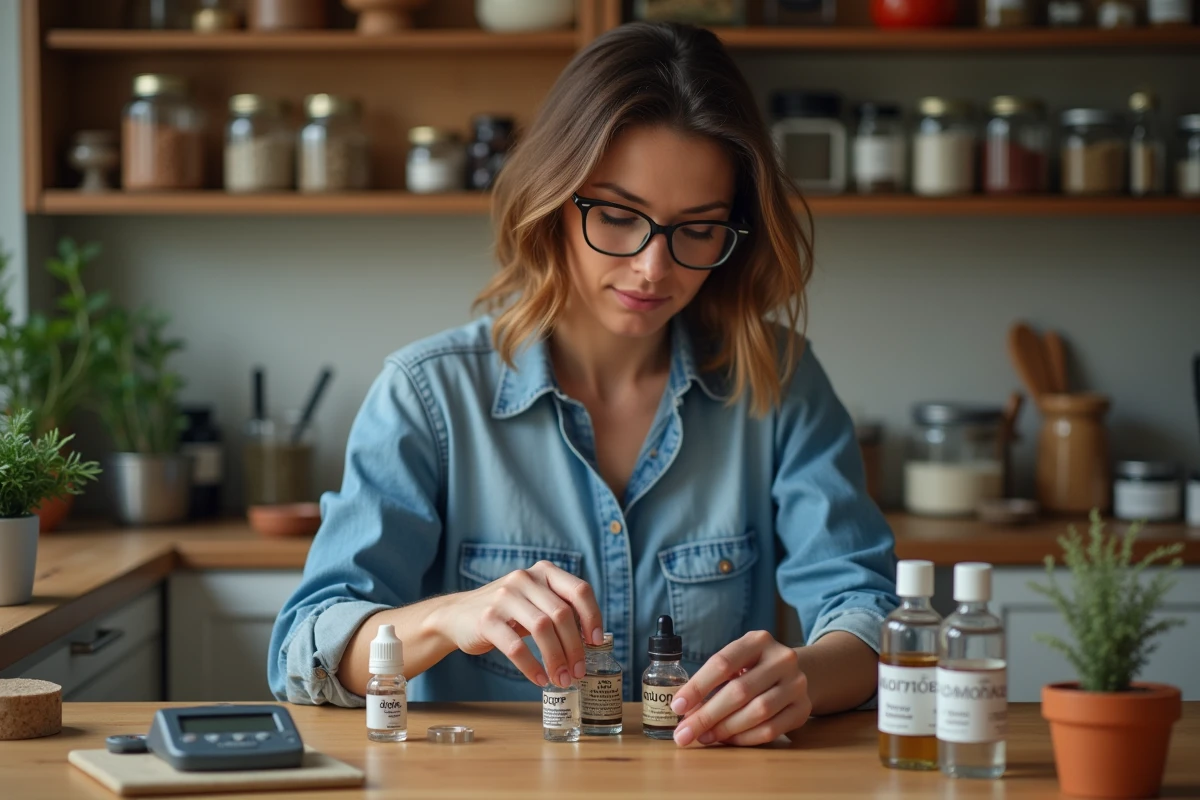
To handle and measure each ingredient, it is advisable to equip oneself with the following tools:
- Empty graduated bottle, made of PET or glass, for mixing and ensuring good preservation
- Syringe or pipette for accurate dosing
- Gloves and safety goggles for safely handling nicotine
A DIY calculator allows for adjusting each component to the nearest milliliter, to avoid errors and excesses. Preparing the recipe on a clean work surface free from food reduces the risk of incidents. DIY packs, which group bases, flavors, boosters, and bottles, simplify the task, especially for beginners.
Also, think about safety: nicotine should always be kept out of reach of children, and the workspace should be well-ventilated. These precautions are essential for a personalized vaping experience in complete serenity.
Secrets and tips for customizing and perfecting your homemade recipes
Mastering DIY liquid involves an essential step: steeping, also known as maturation. This resting period allows flavors to harmonize and the taste to fully balance. The time varies depending on the flavor families, as shown by these guidelines:
- For fruity flavors, a few days of patience are sufficient
- For gourmet or classic recipes, it is better to count up to two weeks
Remember to shake the bottle every day and keep it away from light to preserve the aromatic richness of the mixture.
Personalization takes shape in the combination of concentrated flavors. Mixing fruity, menthol, gourmet, or classic notes opens the door to new recipes. The dosage remains crucial:
- Using too much risks overpowering the nuances
- Conversely, a lack of flavor makes the vape bland and flat
Additives refine the recipe, whether to add freshness, sweetness, or a hint of acidity. Some enthusiasts enjoy, for example, energizing a fruity base with a touch of freshness or acidity, provided they remain measured.
Achieving the flavor-vapor balance sometimes requires adjusting the PG/VG ratio. More propylene glycol means more intensity and flavor delivery. More vegetable glycerin means denser vapor and a smoother throat hit. The nicotine dosage adapts to each individual’s feelings, especially when transitioning to vaping.
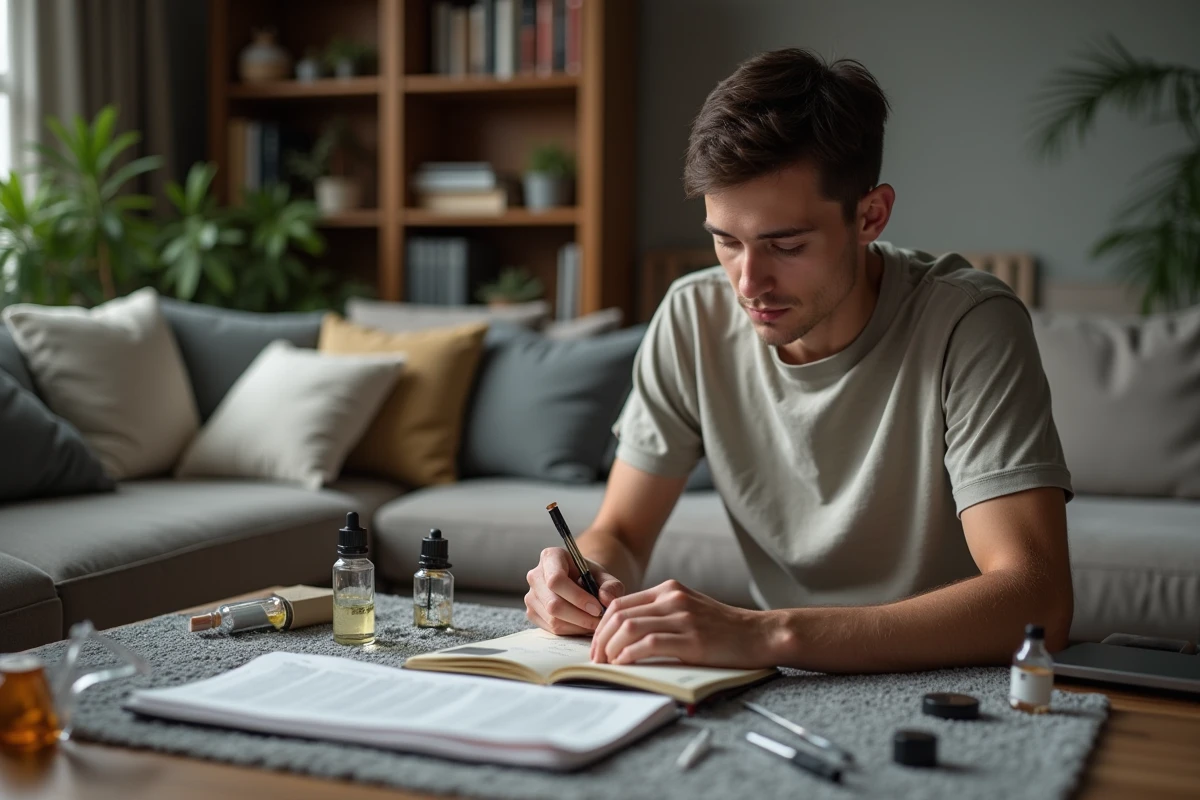
Here are some pointers to go further: record each trial in a notebook, conduct tests on small quantities before preparing large volumes, and draw inspiration from feedback from other members of the DIY community. Use only flavors and additives designed for vaping to ensure the quality and safety of the final e-liquid.
With each trial, every bottle becomes an adventure. Far from fixed recipes, creating a homemade e-liquid is the joy of searching, refining, and discovering—an experience that leaves no one indifferent.