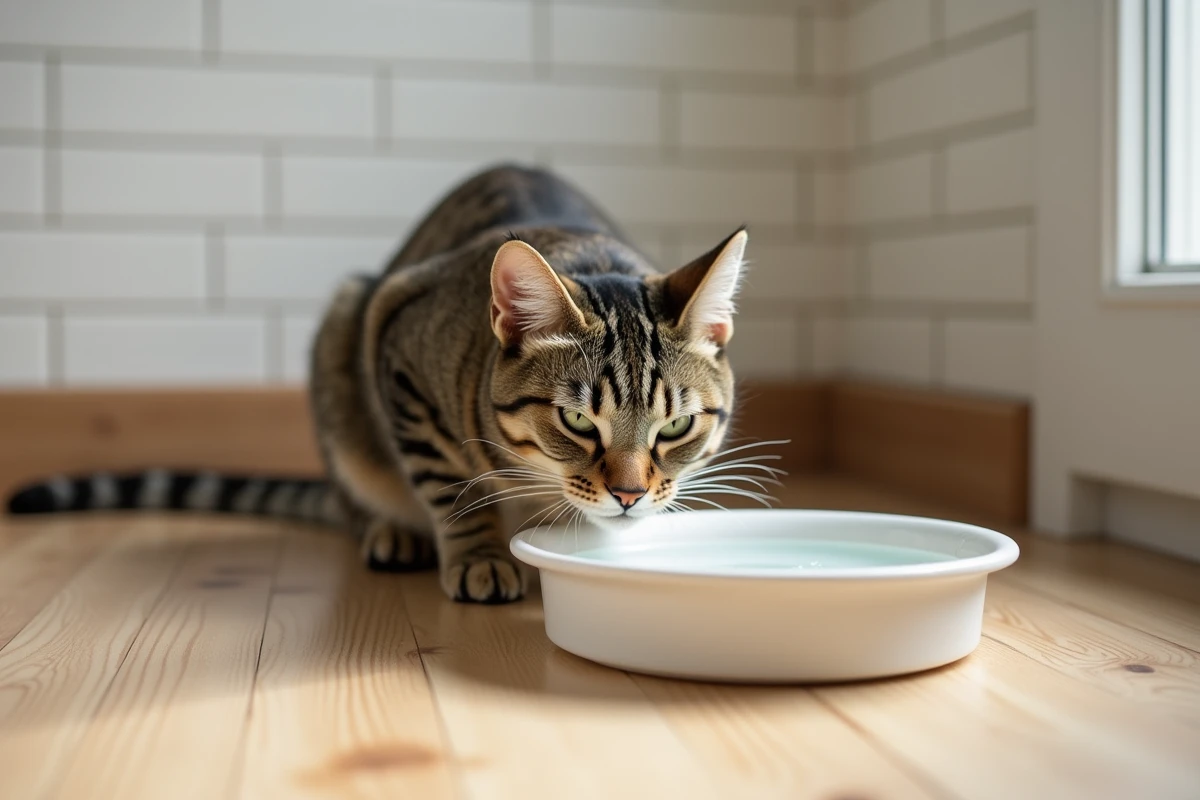
The body of an adult cat is made up of 60 to 70% water. This water is involved in renal filtration, thermal regulation, and the transport of nutrients to the cells. Therefore, the quality of the water provided to the cat directly affects the functioning of its organs, particularly its kidneys, which are notoriously fragile in felines.
Micropollutants in tap water: an underestimated risk for cats
Reports from ANSES and EFSA published between 2018 and 2023 indicate that tap water in certain urban areas contains measurable traces of pharmaceutical residues: hormones, antidepressants, anti-inflammatories. These micropollutants, present at concentrations considered low for humans, pose a different problem for a four-kilogram cat that drinks the same water throughout its life.
The feline kidney, already challenged by a protein-rich diet, must continuously filter these substances. In a cat with renal insufficiency or immunodeficiency, this additional burden can accelerate the deterioration of renal function.
Endocrine disruptors present in the water (residues from contraceptive pills, plasticizers) are suspected of affecting the hormonal system of companion animals in the long term. Some veterinarians specializing in feline medicine are beginning to recommend that fragile cats no longer be offered tap water without prior treatment.
Choosing crystalline and mineral water for cats requires distinguishing between spring water and mineral water, as their compositions differ significantly and have different impacts on the feline urinary system.
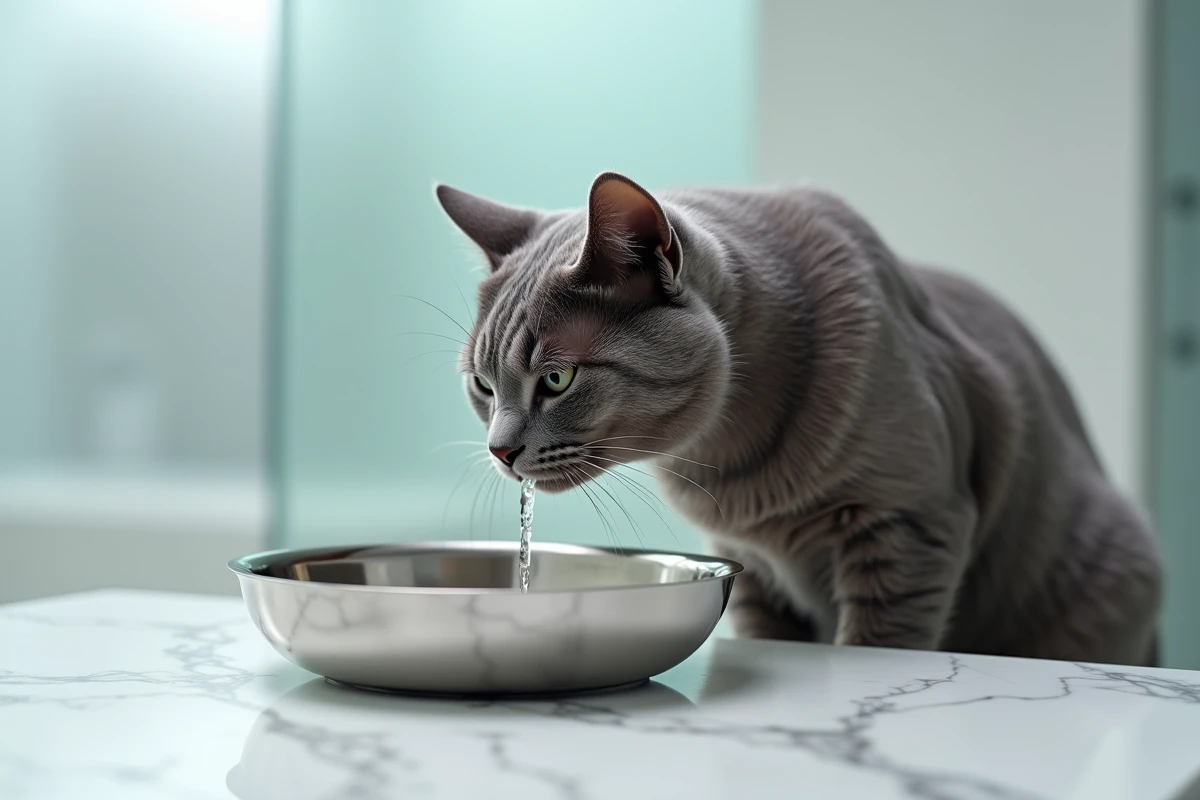
Spring water and mineral water for cats: a distinction to understand
Spring water (like the brand Cristalline, which markets spring water and not mineral water) has a low mineral content. Its composition can vary from batch to batch depending on the bottling source, but it generally remains low in calcium and magnesium.
Natural mineral water, on the other hand, has a stable and guaranteed composition. Some mineral waters have high levels of sodium or magnesium. For a cat, this richness in mineral salts promotes the formation of urinary stones (struvites or calcium oxalates), a common condition in felines fed dry kibble.
Several French veterinary analysis laboratories have reported since 2021 an increase in cases of urinary microcalculi in indoor cats fed premium dry food. Their recommendations include checking not only the amount of water consumed but also the hardness of the domestic water and its mineral content.
Criteria for choosing your cat’s water
- Prefer spring water with low dry residue, indicating light mineralization suitable for the cat’s kidneys
- Check the label for calcium and magnesium levels, which should remain low to limit the risk of urinary crystals
- Avoid mineral waters high in sodium, which can worsen early renal insufficiency
- Change the water in the bowl at least once a day, as stagnant water concentrates bacteria and loses its freshness
Domestic water filtration: what concrete strategies to protect your cat
For owners who wish to keep tap water without exposing their cat to micropollutants, two filtration methods stand out for their effectiveness.
The activated carbon filter (like a filtering pitcher) retains chlorine, some pesticides, and certain pharmaceutical residues. It also improves the taste of the water, which may encourage a reluctant cat to drink more. Its effectiveness remains partial on heavy metals and the finest endocrine disruptors.
Reverse osmosis offers much more thorough filtration. It removes almost all pharmaceutical residues, heavy metals, and endocrine disruptors. Veterinarians specializing in feline medicine recommend this solution for cats with renal insufficiency or immunodeficiency, specifically to limit the cocktail of micropollutants accumulated over the years.
Letting tap water sit in an open pitcher for a few hours allows chlorine to evaporate. However, this simple trick does not eliminate pharmaceutical residues or heavy metals.
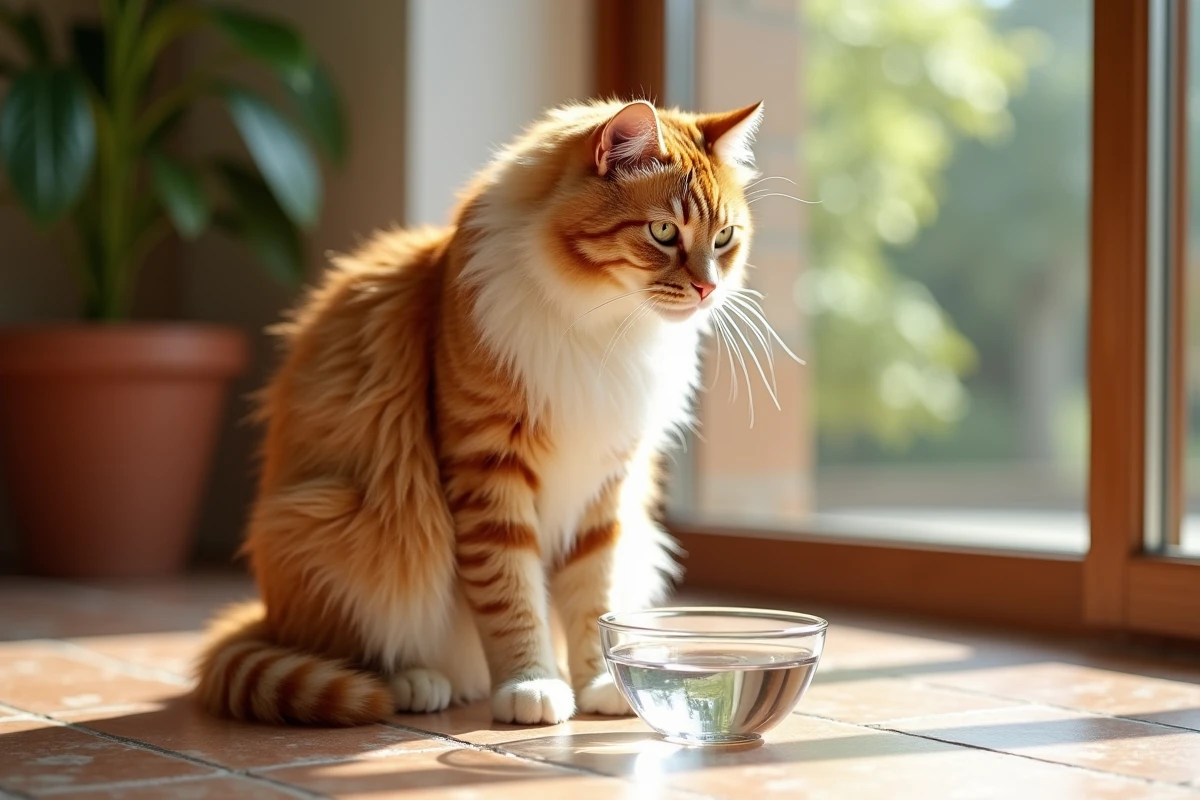
Water hardness and cat kidney health: the role of TH
The hydrotimetric title (TH) measures the concentration of dissolved calcium and magnesium in water. Hard water (high TH) deposits lime in pipes, but more importantly, it provides an excess of minerals to the cat with every sip.
A cat fed kibble already has a concentrated mineral intake from its diet. If the water it drinks is also highly mineralized, the cumulative effect can exceed the filtering capacity of its kidneys. Regions with hard water expose indoor cats more to urinary problems.
Knowing the TH of your water is simple: the data is available on the water bill or the municipal website. In hard water areas, switching to low-mineral spring water or installing a filtration system becomes a relevant preventive measure.
Warning signs related to unsuitable water
- The cat urinates more frequently or outside its litter box, a possible sign of urinary irritation
- The bowl remains full: a chlorine taste or strong odor may deter the cat from drinking
- Episodes of vomiting after drinking, which may indicate intolerance to the mineral composition of the water
The quality of the water provided to a cat deserves as much attention as the choice of its kibble or wet food. Checking the hardness of the water, reading bottle labels, and filtering tap water are three accessible actions that concretely protect the kidneys and urinary system of an animal whose life expectancy partly depends on what it drinks every day.