In the heart of Paris, the Seine winds its way, lined with buildings that do more than connect two banks; they tell centuries of architectural history. These structures, more than mere infrastructures, are artistic, political, and technical creations. They embody the evolution of the French capital, from medieval passages to contemporary feats. Each bridge, each walkway, holds its own identity, its soul, shaped by time and history. They are the silent witnesses to the footsteps of millions of Parisians and visitors, remaining places of life, meeting, and contemplation.
The bridges and walkways of Paris: artistic works steeped in history
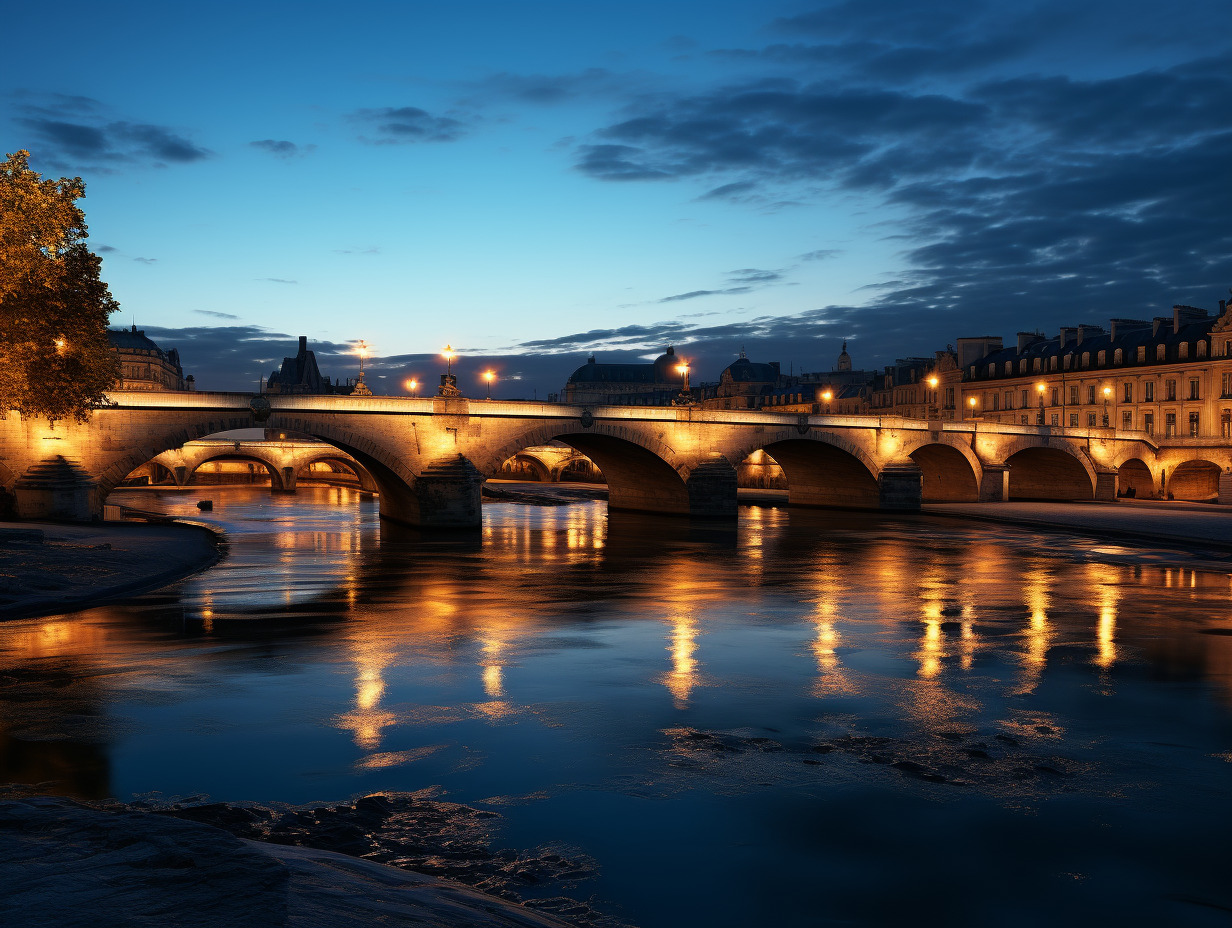
Paris, an open-air museum city, offers its residents and visitors an exceptional collection of artistic works spanning the Seine. Each bridge and each walkway reveals a page of history and architecture in Paris. The Pont-Neuf, for example, inaugurated in 1606 during the reign of Henri III, stands as the oldest bridge in the capital. Associated with Henri IV, its silhouette was wrapped by the artist Christo, giving it a new ephemeral artistic dimension.
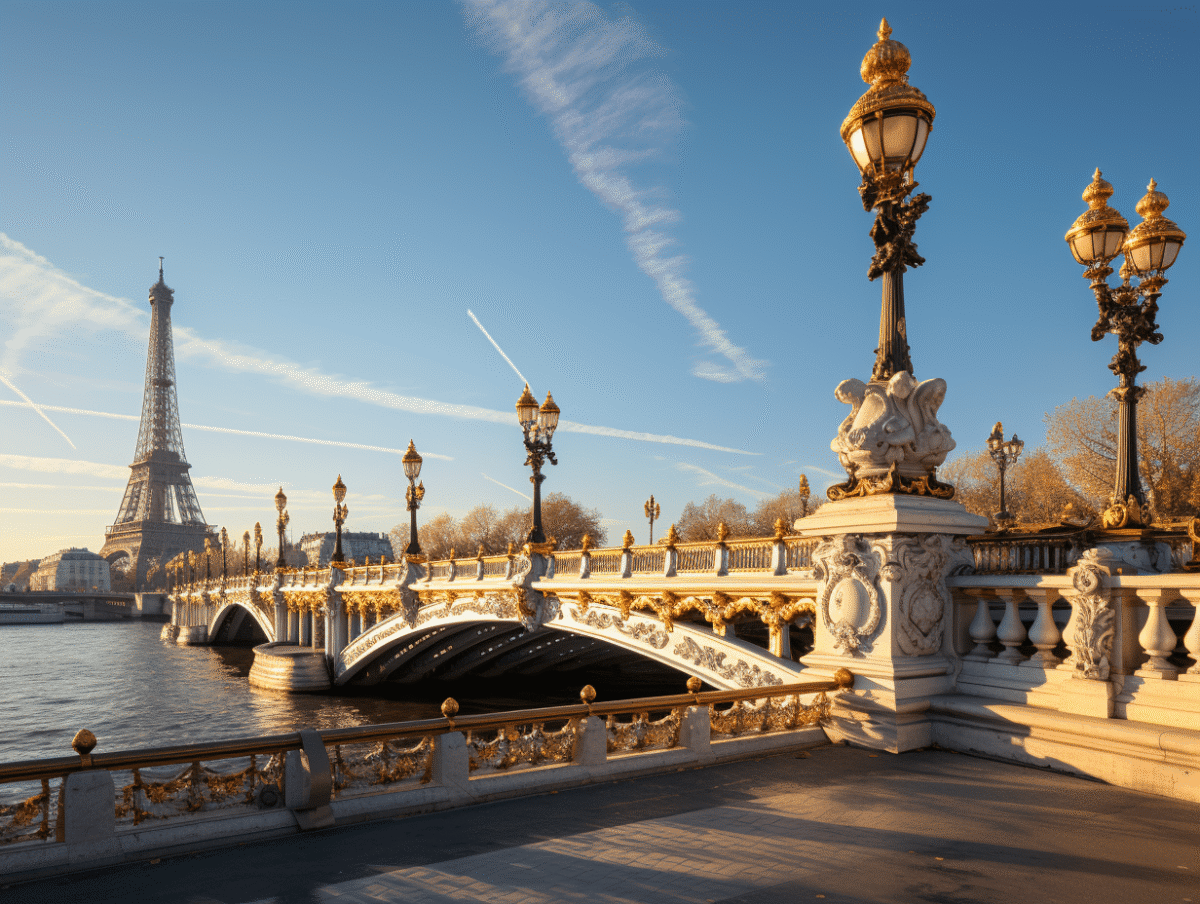
The splendor of the Belle Époque crystallizes in the Pont Alexandre III, inaugurated in 1900 by Nicholas II of Russia and Félix Faure, President of the French Republic. A true symbol of the Franco-Russian alliance, this bridge is adorned with golden sculptures and imposing candelabras, offering the city unparalleled elegance. Beyond aesthetics, some bridges bear witness to social and political changes, like the Pont de la Concorde, built with stones from the fortress of the Bastille, a reversed symbol of the French Revolution.
Poetry is not left out in this river inventory; the Pont Mirabeau, immortalized by the poet Guillaume Apollinaire, or the Léopold-Sédar-Senghor footbridge, formerly the Pont de Solférino, invites contemplative strolling between the Tuileries Garden and the Musée d’Orsay. These structures are not mere crossings; they are links, places of memory, where the art and history of Paris are reflected in the waters of the Seine.
The bridges of Paris: architectural innovation and cultural symbols
Beyond their utilitarian function, the bridges of Paris are part of a process of architectural innovation and cultural symbolism. The Simone-de-Beauvoir footbridge, for example, inaugurated in 2006, is the work of architect Dietmar Feichtinger. Its sinuous silhouette and airy design make it a model of modern aesthetics and technical prowess, connecting the Parc de Bercy to the Bibliothèque nationale de France.
The Charles-de-Gaulle Bridge, on the other hand, is the result of the collaborative work of Louis Arretche and Roman Karasinsky. Completed between 1993 and 1996, it stands out for its sleek form and its ability to combine functionality and elegance, thus linking the Lyon and Austerlitz train stations. These recent works testify to the continuity of Parisian ambition to reconcile public utility and architectural advancements.
The bridges of Paris are also cultural backdrops, immortalized by cinema and literature. The film ‘Les Amants du Pont-Neuf’, directed by Leos Carax and starring Juliette Binoche and Denis Lavant, celebrates the romantic dimension of the city’s oldest bridge. These structures are not just passages: they are living emblems of creation and artistic expression, thus reflecting the multidimensional soul of Paris.